














1. The Big Picture: Why and How We Re-Imagine Urban Space
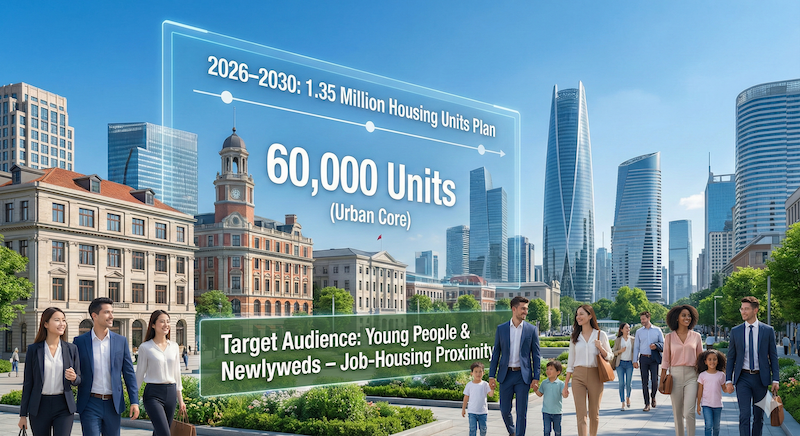
Urban planning is entering a transformative era. The government has launched an ambitious 5-year housing supply plan (2026–2030) aiming to start construction on 1.35 million housing units. However, the most critical surgical strike in this plan is the “Urban Core” subset: approximately 60,000 units (59,700 precisely) targeted at high-demand metropolitan areas. This is not mere expansion; it is a sophisticated reclamation of urban sovereignty, repurposing underutilized state assets to meet modern social demands.
Target Audience: Why This Matters for the Next Generation The primary focus of this housing plan is young people and newlyweds. By prioritizing these groups, the government aims to ensure long-term social stability. Providing high-quality, affordable housing in the city allows the next generation to achieve Jik-ju-geun-jeop (직주근접)—job-housing proximity—enabling them to establish families and “dream of the future” without the burden of extreme commutes.
To achieve these targets, planners are shifting their focus from finding new land to re-imagining existing “Idle Public Land” and aging administrative assets.
——————————————————————————–
2. Strategy #1: Breathing New Life into Idle Public Land
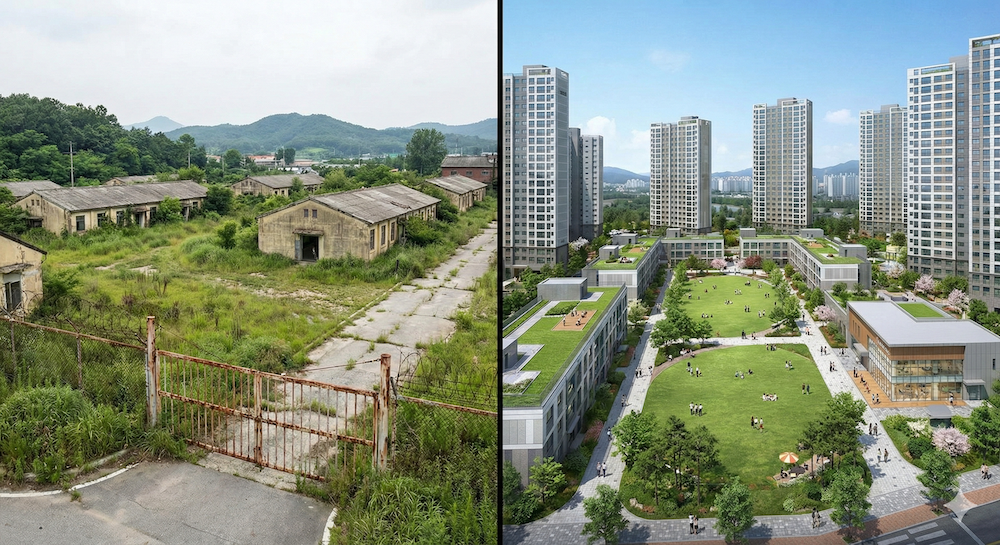
One of our most powerful tools is the identification of “Underused Urban Land.” These are expansive tracts—such as military sites, former golf courses, and research institutes—that occupy prime urban real estate but no longer serve a critical functional need in their current location.
Comparison of Major “Idle Land” Projects
| Site Name | Original Use | Planned Housing Units | Key Strategy for Expansion |
| Yongsan International Business District | Former rail/business core | 10,000 units | Density Increase: Utilizing Floor Area Ratio (FAR) increases to add 4,000 extra units to the original plan. |
| Taereung CC | Military Golf Course | 6,800 units | Harmony & Heritage: Implementing mid-to-low rise housing to respect nearby World Heritage sites. |
| Camp Kim | U.S. Military Site | 2,500 units | Efficiency Optimization: Amending the Yongsan Park Act to rationalize land-use standards and double capacity. |
The “Strategic Why” of Efficiency: The Yongsan Park Act
Planners are not just filling space; they are maximizing it through legal innovation. At Camp Kim, housing was nearly doubled from 1,400 to 2,500 units by amending the Yongsan Park Act. This change shifted green space requirements from a “per person” standard (3㎡) to a “per household” standard (3㎡), aligning it with general housing laws. This is a prime example of reclaiming urban sovereignty—changing rigid, outdated laws to allow more citizens to live in the heart of the city.
While these large-scale tracts provide high volume, the second strategy focuses on the surgical “makeover” of individual buildings.
——————————————————————————–
3. Strategy #2: The “Building Makeover” (Complex Development of Aging Offices)
The strategy of “Complex Development” treats aging public infrastructure as a vertical opportunity. Rather than maintaining a single-purpose police station or post office, we transform these into multi-functional hubs. The government has identified 34 specific locations for these transformations.
Visualizing the Makeover: Input -> Output
- [INPUT] Seoul Medical Center (South Site): An aging institutional medical facility.
- [OUTPUT] Smart Work Hub: 518 units for youth integrated with business facilities like smart-work centers and conference rooms.
- [INPUT] Sungsudong Old Mounted Police Site: A decommissioned functional building in a high-infrastructure area.
- [OUTPUT] Youth & Newlywed Housing: 260 homes designed to leverage Sungsudong’s cultural and transit infrastructure.
- [INPUT] Suwon Mail Center: A central mail processing facility with functions that can be relocated.
- [OUTPUT] High-Quality Public Housing: 936 units featuring specialized Life SOC (Social Overhead Capital).
Why “Life SOC” is the Heart of Community
The success of these makeovers depends on Life SOC. For projects like the Suwon Mail Center, this means integrating daycare centers, small libraries, and “Safe Playgrounds” directly into the residential complex. By combining social services with housing, we create a community that supports child-rearing and education, moving beyond the “dormitory” model of old urban apartments.
When these individual building transformations are aggregated into a single high-density node, we create the “Compact City.”
——————————————————————————–
4. Strategy #3: The Compact City & Space Innovation Zones
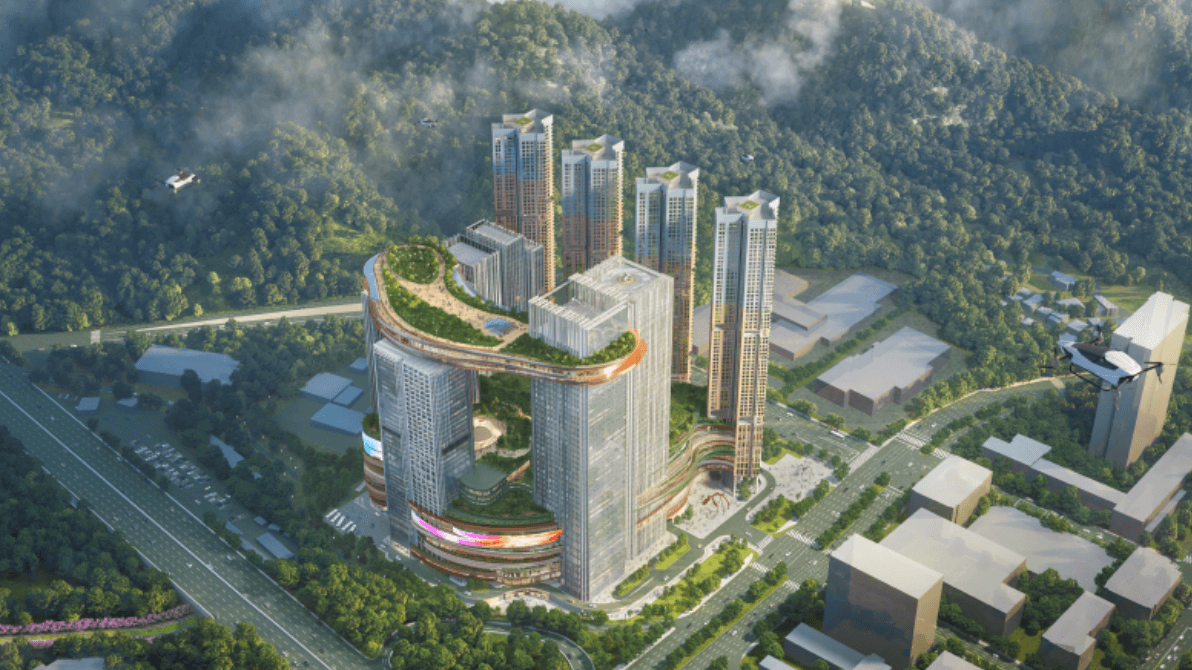
The “Compact City” (best exemplified by the Doksan Air Force Base redevelopment) is a paradigm shift where military sites are compressed and modernized to create a “city within a city.” These sites become economic nodes where jobs, culture, and housing exist in a high-density, walkable environment.
To facilitate this, the government uses “Space Innovation Zones”—or “White Zones.” Inspired by the Singapore model, this is a radical departure from traditional zoning where usage and density are decoupled from standard restrictions.
The 3 Levers of the “White Zone” Paradigm Shift:
- Regulatory Decoupling: Allowing radical flexibility in mixing residential, commercial, and industrial usage without traditional zoning barriers.
- Density Maximization: Relaxing Floor Area Ratio (FAR) and height restrictions to encourage “vertical cities.”
- Administrative Speed: Exempting critical projects from lengthy public corporation feasibility studies and fast-tracking environmental/heritage reviews.
The Goal: Jik-ju-geun-jeop (직주근접)
The strategic logic is simple: Job-Housing Proximity. By placing housing “Next to the Subway! Next to Jobs! Next to Culture!”, we reduce the economic and social costs of commuting, ensuring the city remains vibrant and sustainable.
——————————————————————————–
5. Regional Impact: Where the Change is Happening
The 60,000 units in the urban core are strategically distributed across the capital region to ensure balanced growth and accessibility.
| Region | Number of Units | Percentage of Total Supply |
| Seoul | 32,000 Units | 53.3% |
| Gyeonggi | 28,000 Units | 46.5% |
| Incheon | 100 Units | 0.2% |
Spotlight: The Gwacheon “Future Industrial City”
The single largest regional project is the Gwacheon Area (9,800 units), which includes the Gwacheon Racecourse (Let’s Run Park) and the Defense Security Support Command (Bangcheopsa).
Unlike older “Bedroom Towns,” Gwacheon is designed for economic self-sufficiency, with 17.8% (240,000㎡) of the land dedicated to the AI Techno Valley. This ensures the development functions as a thriving employment hub, connecting the Gwacheon Knowledge Information Town with the Yangjae AI Special District.
——————————————————————————–
6. Summary Checklist: The Urban Redevelopment Toolkit
As students of urban planning, you should view these strategies as a set of Planning Levers used to reclaim and optimize urban land:
- Functional Relocation: Reclaiming high-value land by moving outdated functions (e.g., mail centers, military units) to the periphery.
- Legal Efficiency: Using tools like the Yongsan Park Act to update density standards for the modern era.
- The “White Zone” Shift: Implementing Space Innovation Zones to decouple land use from restrictive 20th-century zoning.
- Vertical Complexity: Using Complex Development to stack “Life SOC” (daycare, libraries) with housing.
- Self-Sufficiency Integration: Ensuring large-scale projects include “Jik-ju-geun-jeop” elements like Techno Valleys to prevent the creation of “Bedroom Towns.”
By applying these tools, the government isn’t just building housing; it is re-engineering the urban fabric to meet the social needs of a new generation.